Grams of chlorine an hour, and the salt that has to be there first
The best salt chlorinators for 2026
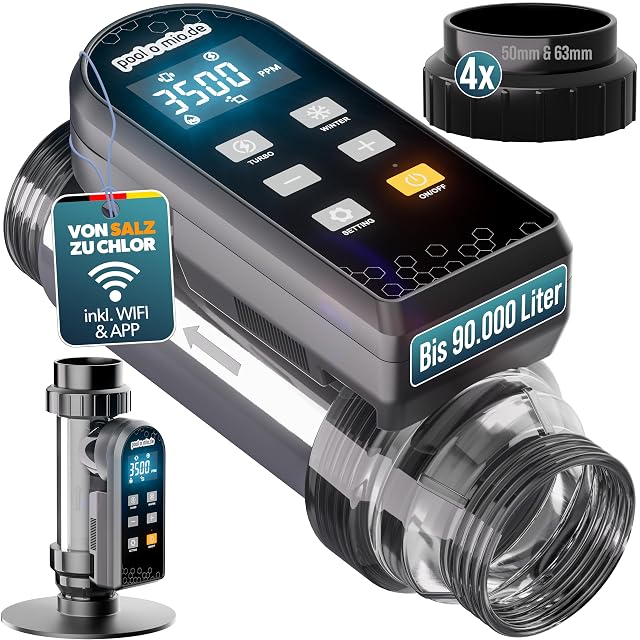
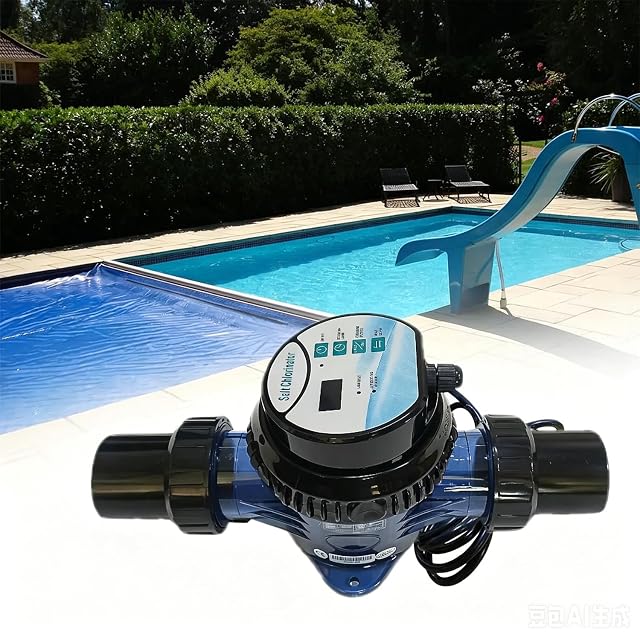
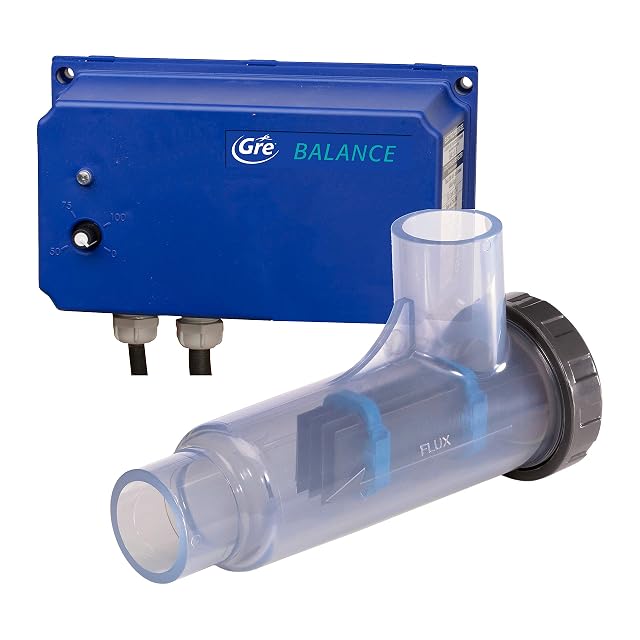
A salt chlorinator does not replace chlorine; it makes chlorine, by passing current through salted water. That distinction is the whole shelf, and it is why the figure to read is output in grams per hour. The listings that publish it — "20 g/h" for a pool up to 90 000 l, "2,5 g/h" for one up to 10 m³ — let you do the only calculation that matters: a pool needs roughly two to three grams of chlorine per cubic metre per day in summer, so a 30 m³ pool wants something near 7 g/h over ten running hours. Where output is missing and only a pool size is given, you are trusting a conversion the maker has not shown. The second figure is the salinity the cell needs, in grams per litre. Three to five g/l is typical on this shelf and it is far below sea water, but it is not nothing: a 30 m³ pool at 4 g/l needs 120 kg of salt in it before the cell will produce anything at all. Then the cell, which is the consumable: titanium plates coated with ruthenium or iridium oxide, with a life published in hours by the makers who publish anything. Self-cleaning by polarity reversal is what keeps scale off those plates, and its absence means manual descaling in acid. And the control, from a dial to app-based scheduling. We compare output per hour, required salinity, cell type and stated life, self-cleaning, flow and salt sensing, and control.