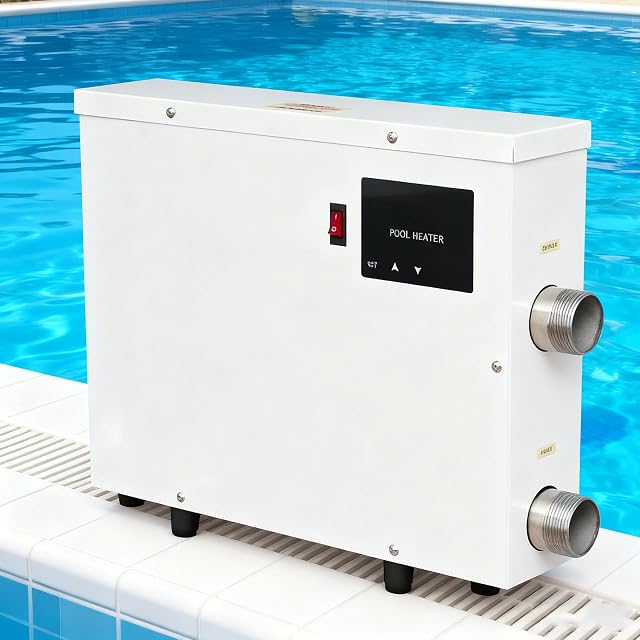
Direct heat, priced in kilowatt-hours rather than in COP
The best pool heaters for 2026
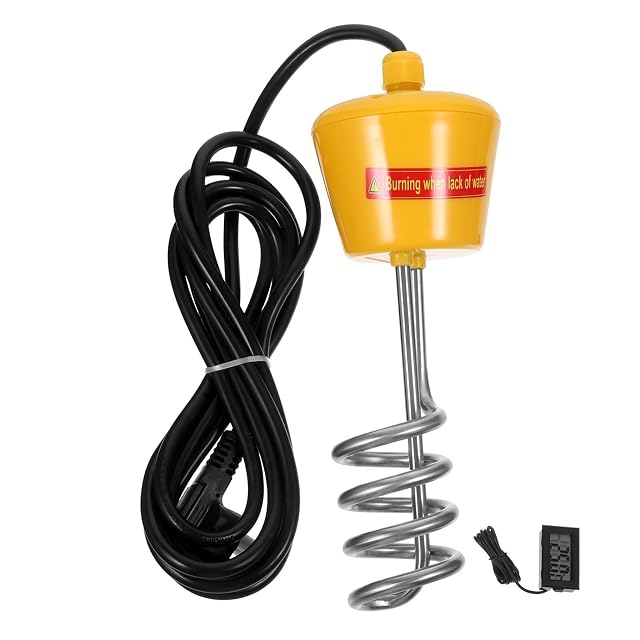
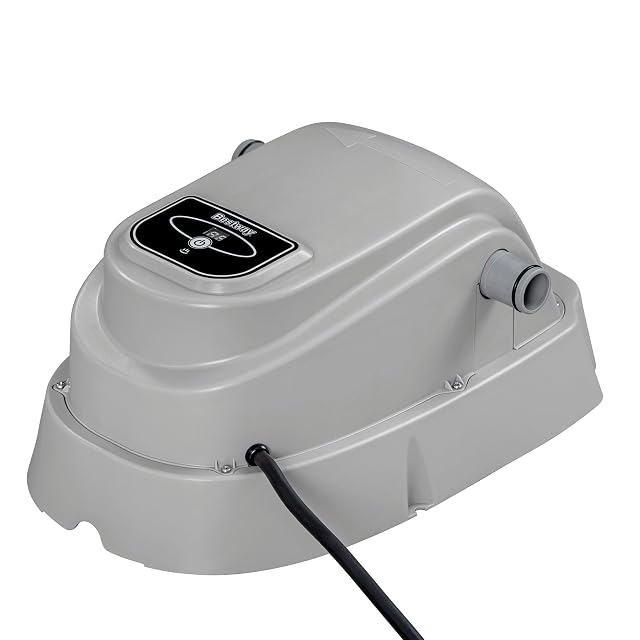
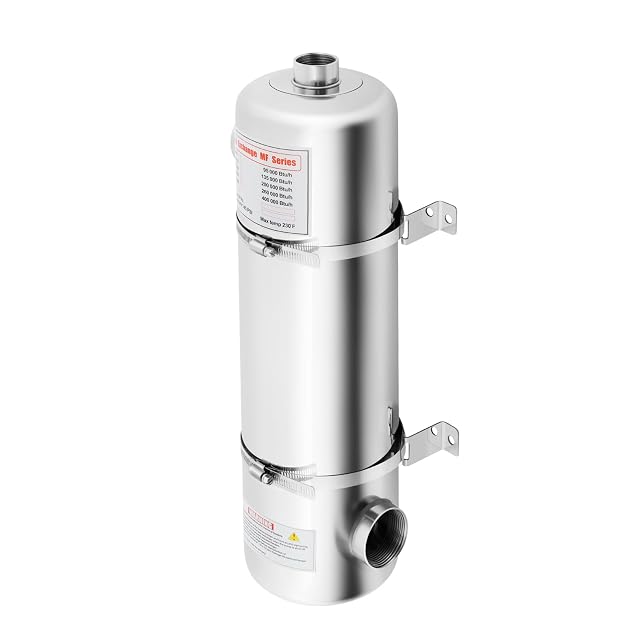
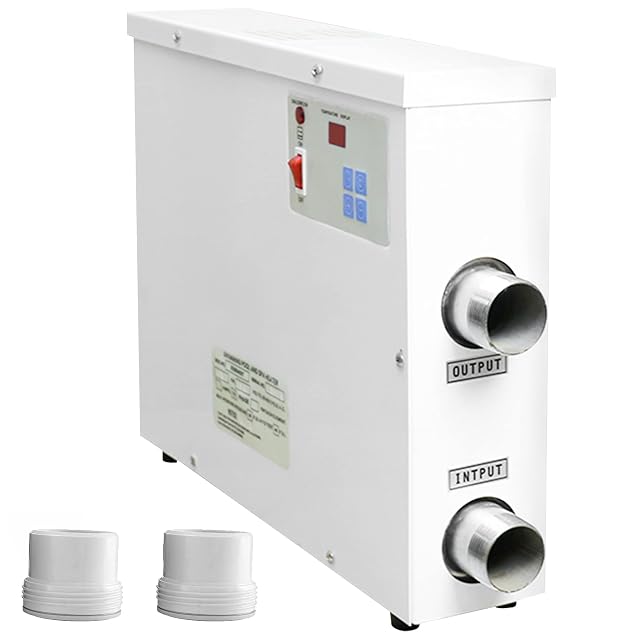
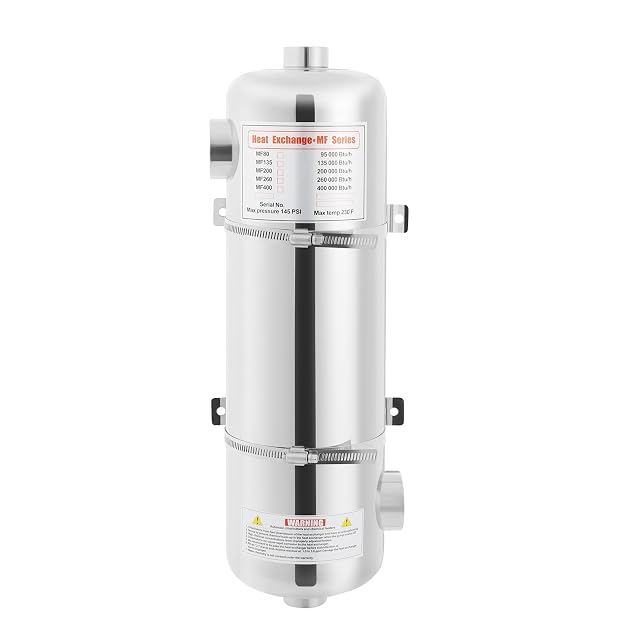
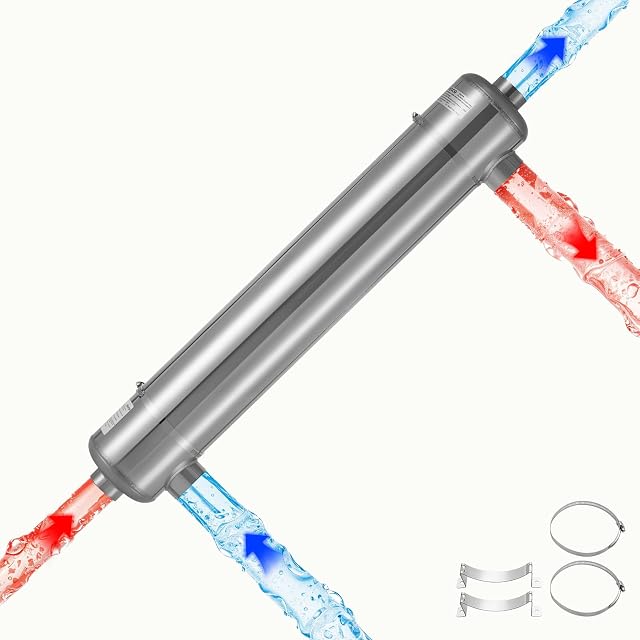
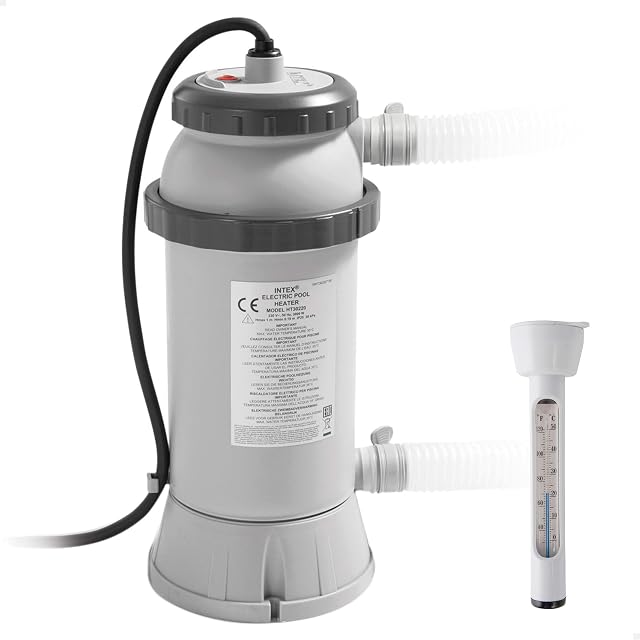
This shelf holds the heaters that make their own heat rather than moving it: electric flow heaters, immersion elements, and the stainless wood-fired barrels that sit beside a pool with a coil in them. They share one honest property — every kilowatt of heat costs a kilowatt of energy, with none of the multiplication a heat pump offers — and one practical advantage: they work at any air temperature, and they heat far faster. The figure to read first is the power in watts, 2 000 to 3 000 W being common for an immersion type, because it sets both the rate of heating and the circuit it needs; anything above about 3 000 W on a single 230 V line is close to the limit of a domestic socket. The second is the flow rate a flow heater requires, because an electric element with insufficient water over it trips or fails — which is why the flow switch and the over-temperature cut-out are the two safety devices worth confirming by name rather than assuming. In wood-fired heaters the equivalent figure is the coil material and wall thickness: stainless throughout, or stainless skin on a mild steel coil. Then connection size, 32 or 38 mm, which decides whether it drops into an existing hose run. And the thermostat, which on this shelf ranges from a bimetal dial to nothing at all. We compare power, required flow, thermostat and cut-outs, materials, connection size and stated heat-up rate.