Skip to content

tillvex Sand Filter System with Timer 13 200 l/h vs KESSER Sand Filter System 10 200 l/h

Which sand filter system covers the specification you will actually use?

Both of these sit at the large end of the domestic sand filter shelf, and both are sold on a headline flow figure. The differences appear in what surrounds that figure: the media they take, how the water gets in, and whether anything decides when they run.

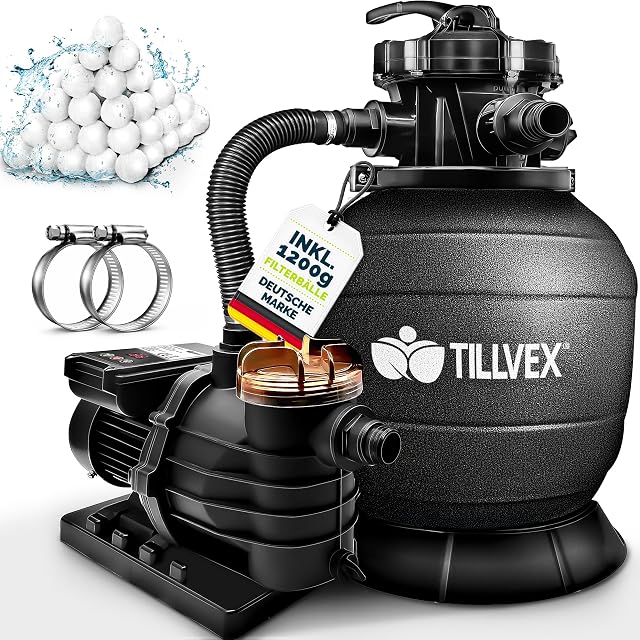
tillvex sand filter system with a timer, pressure gauge and seven-way valve

tillvex Sand Filter System with Timer 13 200 l/h

Wins 6 of 10

Check price

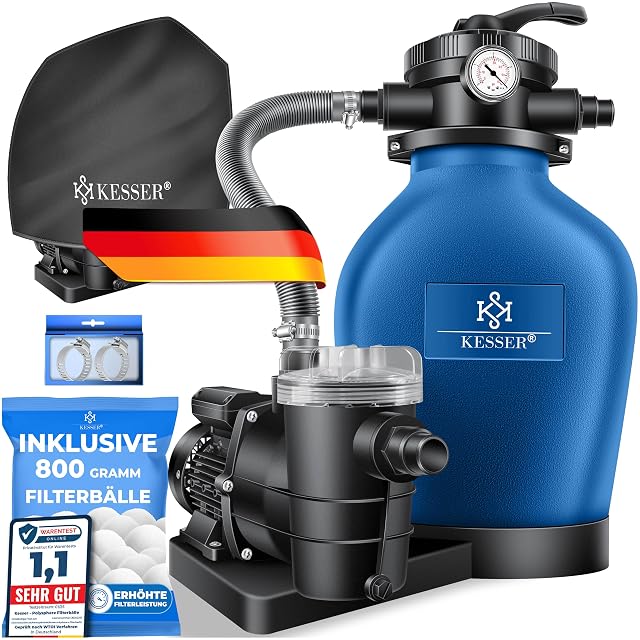
KESSER sand filter system with a pressure gauge and seven-position valve

KESSER Sand Filter System 10 200 l/h

Wins 2 of 10

Check price

Line by line

Compared on Sand Filter System with Timer 13 200 l/h Sand Filter System 10 200 l/h
Flow rate Maximum 13 200 l/h 10 200 l/h (10 m³/h)
Stated pool volume Up to 40 000 l Up to 60 000 l
Maximum head 12 m Not published
Tank capacity Up to 30 kg of sand 20 litres
Media supplied 1 200 g of filter balls 800 g of filter balls
Media accepted Sand or filter balls Filter balls or special filter sand
Valve positions Seven, named Seven settings, not named
Pump power Not published in watts 400 W
Timer Integrated, adjustable from 1 to 24 hours Not published
Hose size Ø 32 mm or Ø 38 mm via integrated adapter Not published

A tick means one listing published something the other did not, or published a better figure. It does not mean the product is better, and the column is not a score out of anything: a maker who says less loses lines here without losing a comparison. The two verdicts below are where the page is settled.

Which one, for whom

Buy the tillvex Sand Filter System with Timer 13 200 l/h

The tillvex is the more completely specified of the two and the one that turns its flow rate into a daily turnover. It names all seven valve positions, states the head it can work against, tells you which hose diameters it accepts, and supplies the larger charge of filter balls. What it does not publish is a wattage, so the running cost of that flow is unknown from the page.

Buy the KESSER Sand Filter System 10 200 l/h

The KESSER is rated for the larger pool of the two and publishes a wattage, which makes its consumption calculable. It states seven settings without naming them and leaves the hose size and the working head unpublished, so what it will actually deliver through a garden installation cannot be read off the listing. Its supplied charge of media is the smaller.

The questions these two raise

What are the seven valve positions for?

They route the water differently: filtering, backwashing, rinsing after a backwash, circulating without passing through the media, draining, closing the circuit, and a winter setting that leaves the valve unloaded. A system that names them is telling you what it can do.

Are filter balls a substitute for sand?

Both systems accept either. Balls weigh a fraction of the equivalent sand charge and are washable; sand is the cheaper sack and the reference case. What matters for the vessel is that the medium is graded to stay inside it.

Why does a timer matter more than extra flow?

Because turnover is a daily total. A system running eight hours at a modest rate moves more water in a day than a faster one running two, and a timer is what makes those hours happen without anybody remembering.

The full reviews

Any amount written into the prose below was read once, the day that sentence was composed, and nothing has updated it since. The figure a shop is asking today loads next to the product itself, and that is the only live one on this page.